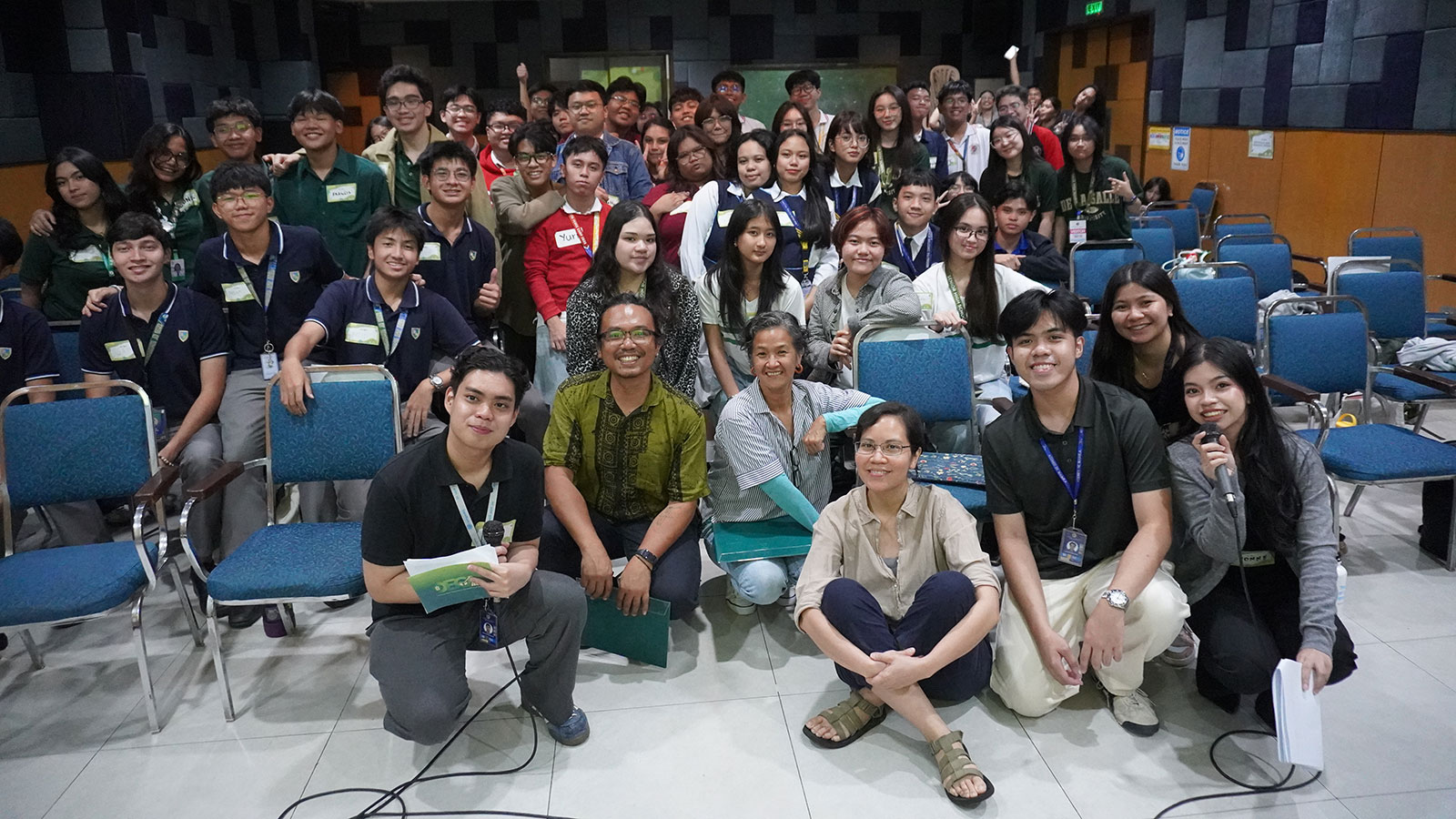
As part of Good Food Community’s Food Justice Now! campaign, Mabi and Tey spoke about food sovereignty at the recent Development Economics Conference of Ateneo (DECA) 2026. Hosted by the Ateneo Economics Association (AEA), DECA 2026 is a four-day academic program that aims to encourage high school students to engage in socio-economic discourse on the Philippines’ pressing economic issues.
This year’s theme was “SAGANA: Strengthening the Agricultural Chain for Shared Prosperity,” and central to our conversation with the students is the concept of food sovereignty in order to achieve genuine sagana. The students from different schools in Metro Manila shared their understanding of “sovereignty” as “control,” “ownership,” and “having a say,” and we invited them to share how the current food system undermines their definitions. The students’ inputs showed a comprehensive picture of the many inequities marking the corporate supply chain, from the poverty and hunger faced by our producers to the growing burden of disease due to corporate food.
“This is because profit maximization is the primary motive in the dominant agri-food sector,” shares Mabi. Ironically, the corporate food system’s emphasis on productivity has failed to achieve the sagana needed to alleviate global hunger, especially among our food producers. Despite historic overproduction, food insecurity remains at alarming levels, according to the World Food Programme, and this is because people’s sovereignty is undermined or restricted in the dominant food system through neoliberal trade policies that commodify food, withhold support for domestic production, plunder our natural resources, and open up our markets to subsidized surplus from abroad.
Tey then talked about food sovereignty as an important rights-based concept and framework that addresses the injustices in the food system and ensures that people have safe, nutritious, and culturally appropriate food to eat. Food sovereignty is “the full realization of people’s democracy in all aspects of the food and agriculture systems.” The idea of sagana without people’s sovereignty ignores the reality of concentration of power in a handful of actors in the food system, and he emphasized the need for structural change, where power is in the hands of the people: at its core, this means the farmers’ ownership and control over their production resources, such as land and seeds.
As the People’s Coalition on Food Sovereignty (PCFS) defines, “Food sovereignty is the power of people and communities to assert and realize the right to food and produce food and fight the power of corporations and other forces that destroy the people’s food production systems and deny them food and life.”