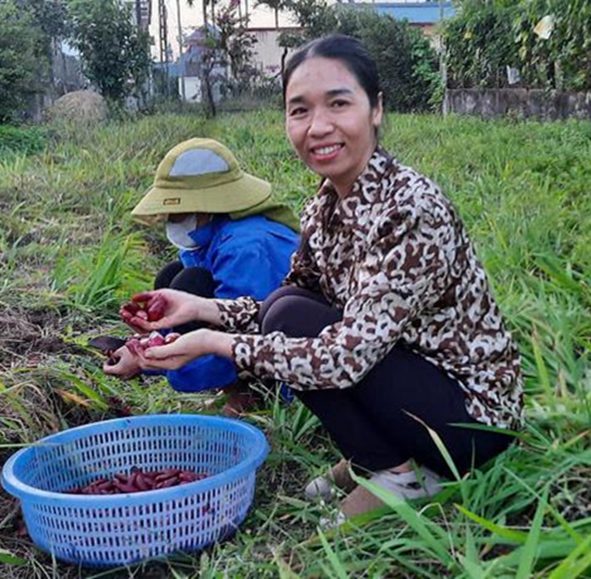
This model is implemented by Ms. Vu Thi Tham. She is also one of the members in the communes who started practicing earthworm (vermicomposting) farming at home following a field trip to Ha Nam province.
The implementation of the model encountered some specific difficulties. Because the area was not convenient for cattle farming (a source of earthworm feed), Ms. Tham remained determined and had to travel to other communes to secure raw materials to raise the earthworms. Together with other women, she established a group to practice the vermicomposting model and built a common fund, totaling 20 members. Monthly, the women organized meetings to share experiences on earthworm farming, poultry raising, and product exchange. After a period of implementation, the model slowed down due to the impact of the African Swine Fever epidemic, which led to a loss of raw materials for earthworm feed.
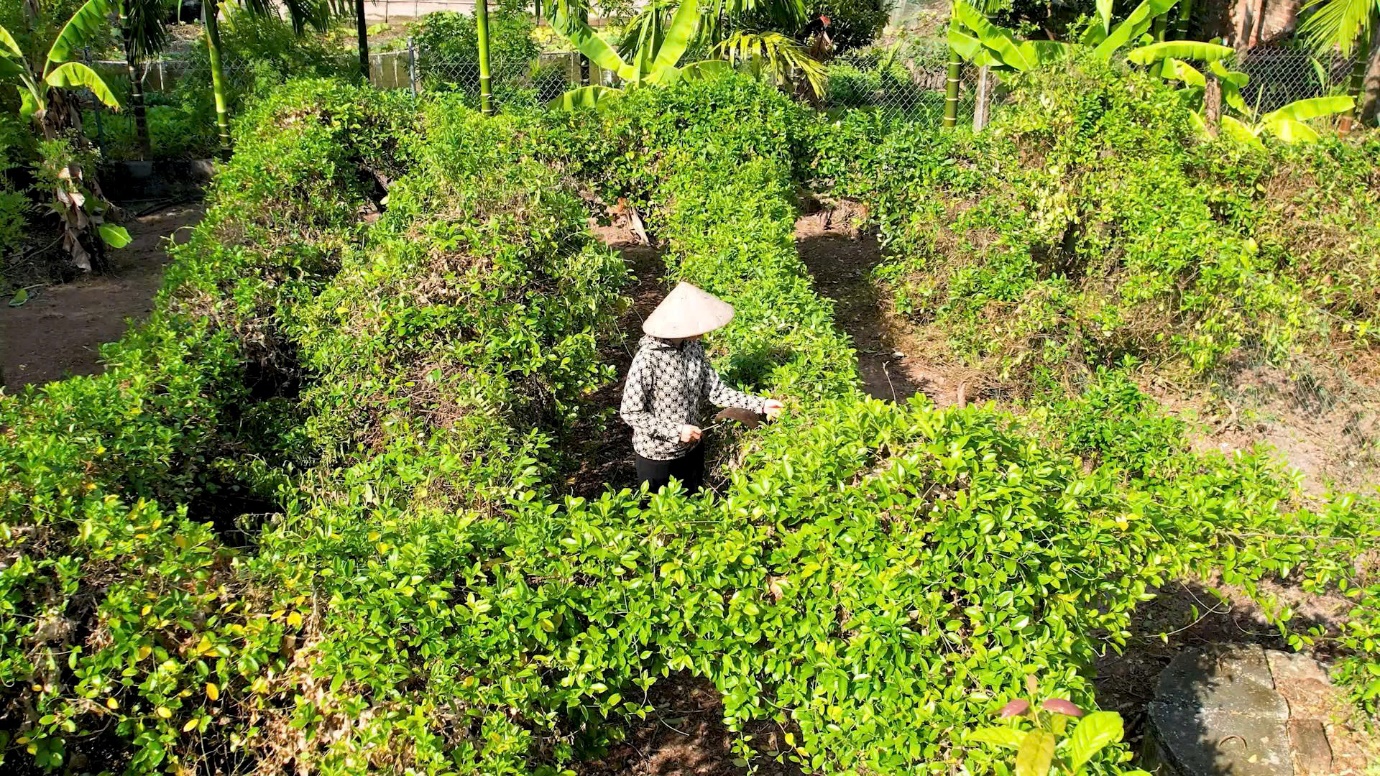
Due to her fear of the smell of pesticides and her passion for using herbs for daily ailments, she decided to switch to medicinal herb cultivation in 2020. She grows medicinal plants such as Gymnema sylvestre, Mint, Eleutherine bulbosa and Solanum procumbens.
The cultivated area spans 720m2. The model integrates medicinal plant cultivation, characterized by the strict application of ecological farming methods and the absolute prohibition of chemical use.
In 2024, continuing to receive support from the Women’s Union of Hai Hau district and CGFED, she expanded the quantity, planted a new crop of Eleutherine bulbosa and purchased organic fertilizer to improve the soil for her crops. A portion of the support was used to renovate the plant trellises for the development of Gymnema sylvestre.
Crops, animals found on the site (if farm) and methods, techniques applied:
The primary crops at this model are medicinal herbs, including Gymnema sylvestre (Thìa Canh), Mint (Bạc Hà), Eleutherine bulbosa (Sâm Đại Hành) and Solanum procumbens (Cà Gai Leo). Plants are rotated and harvested three times per year, following an initial one-year growth period.
Methods, techniques applied:
Activities, including trainings offered:
Trainings/courses description:
Technical support and training:
Training in CPAM-Biodiversity Monitoring:
Training on Women Leadership for rural women: