The Parachute Method, also known as the seedling broadcasting method, is an effective and increasingly popular approach to rice farming. Promoted by agricultural institutions across Sri Lanka, this tray-based nursery system helps reduce costs while increasing yields compared to conventional rice cultivation practices.
Samantha Ramya Kumari from the Samanala Group is a leading practitioner and trainer of the Parachute Method. She first learned about the technique through a training conducted by Vikalpani and later began applying it in her own paddy field. The method helped her address many challenges she had previously faced with conventional farming that relied on chemical fertilizers and pesticides. Through exchange programs organized by Vikalpani, she also met other farmers practicing the Parachute Method, which allowed her to refine her skills and resolve practical issues.
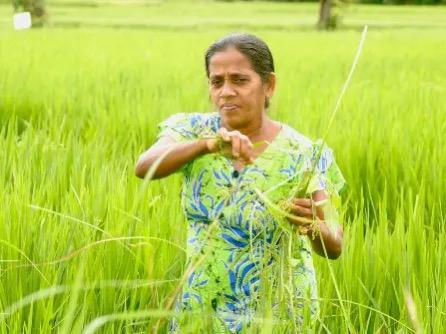
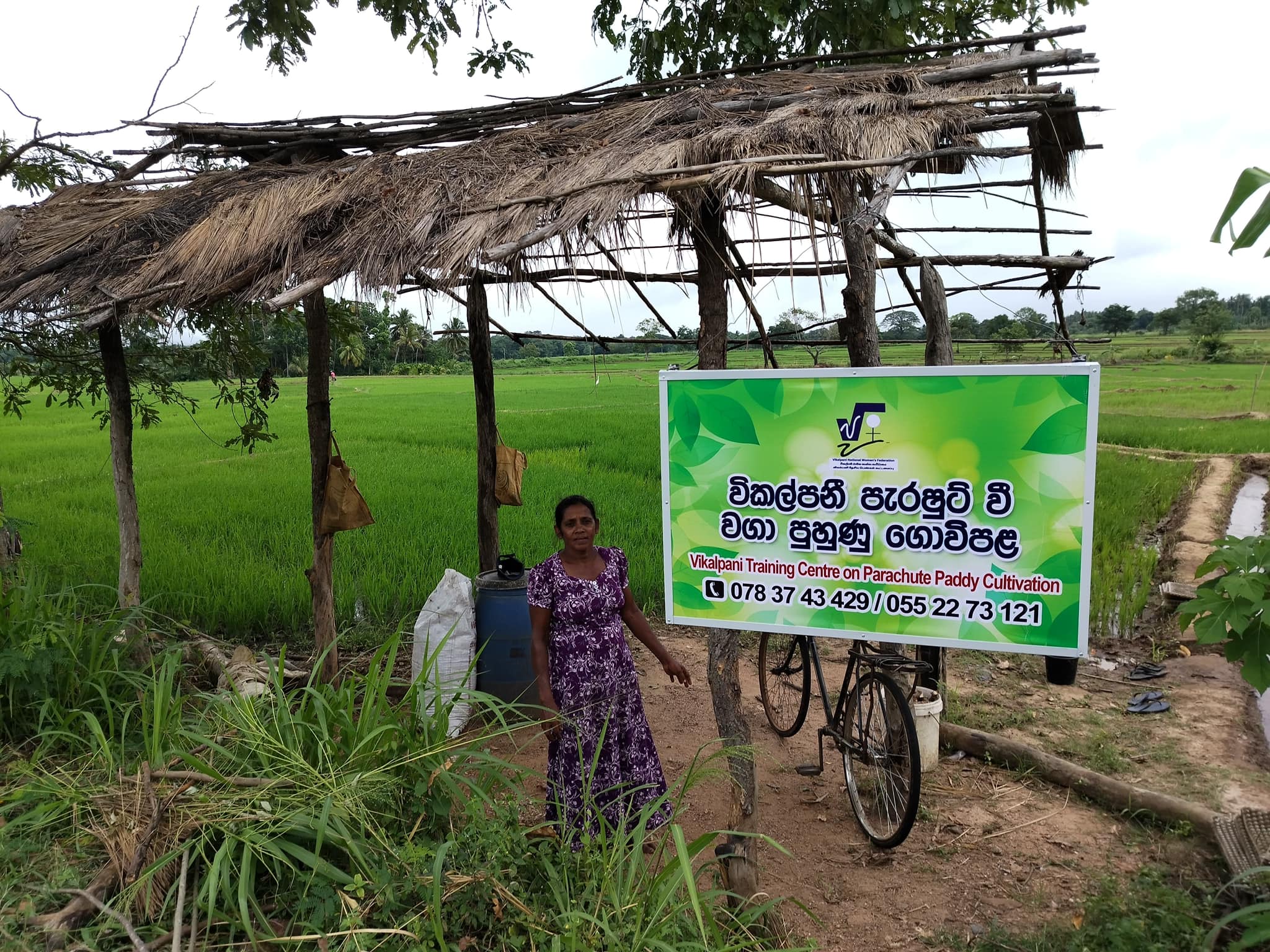
Other women in her group became interested in the approach and visited Samantha’s field to learn directly from her experience. Encouraged by their enthusiasm, she decided to share her knowledge more widely and, with support from Vikalpani, established a training center in her field. Today, this field-based learning site is led by Samantha under the Samanala Group, which actively supports the trainings, including providing meals for trainees and community participants.
The field learning site is located in an area where Vikalpani operates, and agriculture is the community’s main livelihood. Farming activities include home gardening, paddy cultivation, commercial farming, and other seasonal practices. Both men and women work on their farms and sell their harvest primarily to vendors who visit the fields, as well as in village-level markets.
Crops, animals found in the site (if farm) and methods, techniques applied
The parachute cultivation method helps control weeds in the field while reducing both costs and the labour required for weeding. Weeds are maintained on the bunds, as natural pest control methods are practiced. The presence of grasses and other weeds on the bunds creates a favourable environment for beneficial insects and other farmer-friendly organisms.
Weed growth is also managed through proper water control. Additionally, animals such as cows, birds, and insects thrive in this environment because pesticides and chemical fertilizers are not used.
Training/course title/s and description/s conducted by the FLS
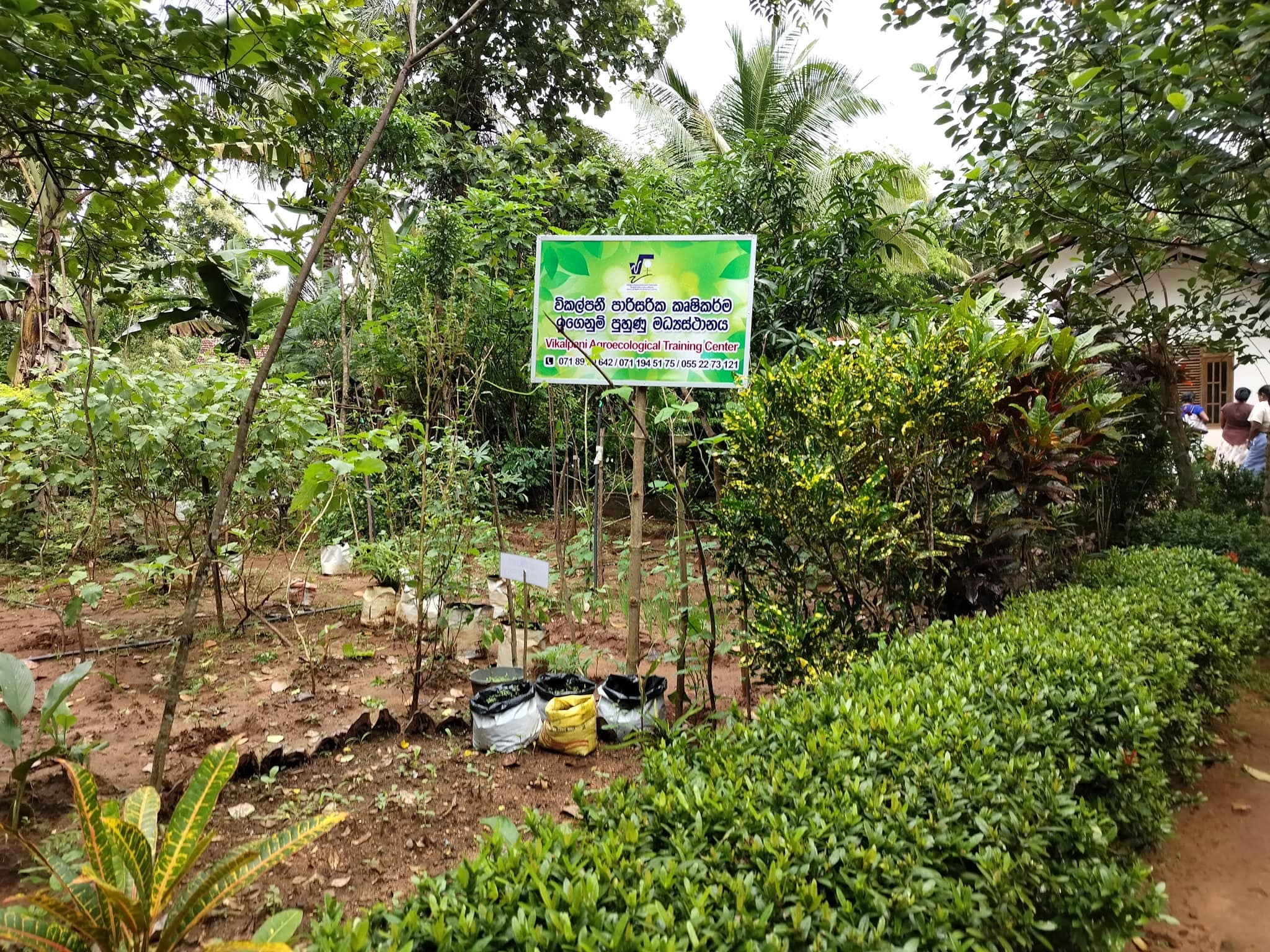
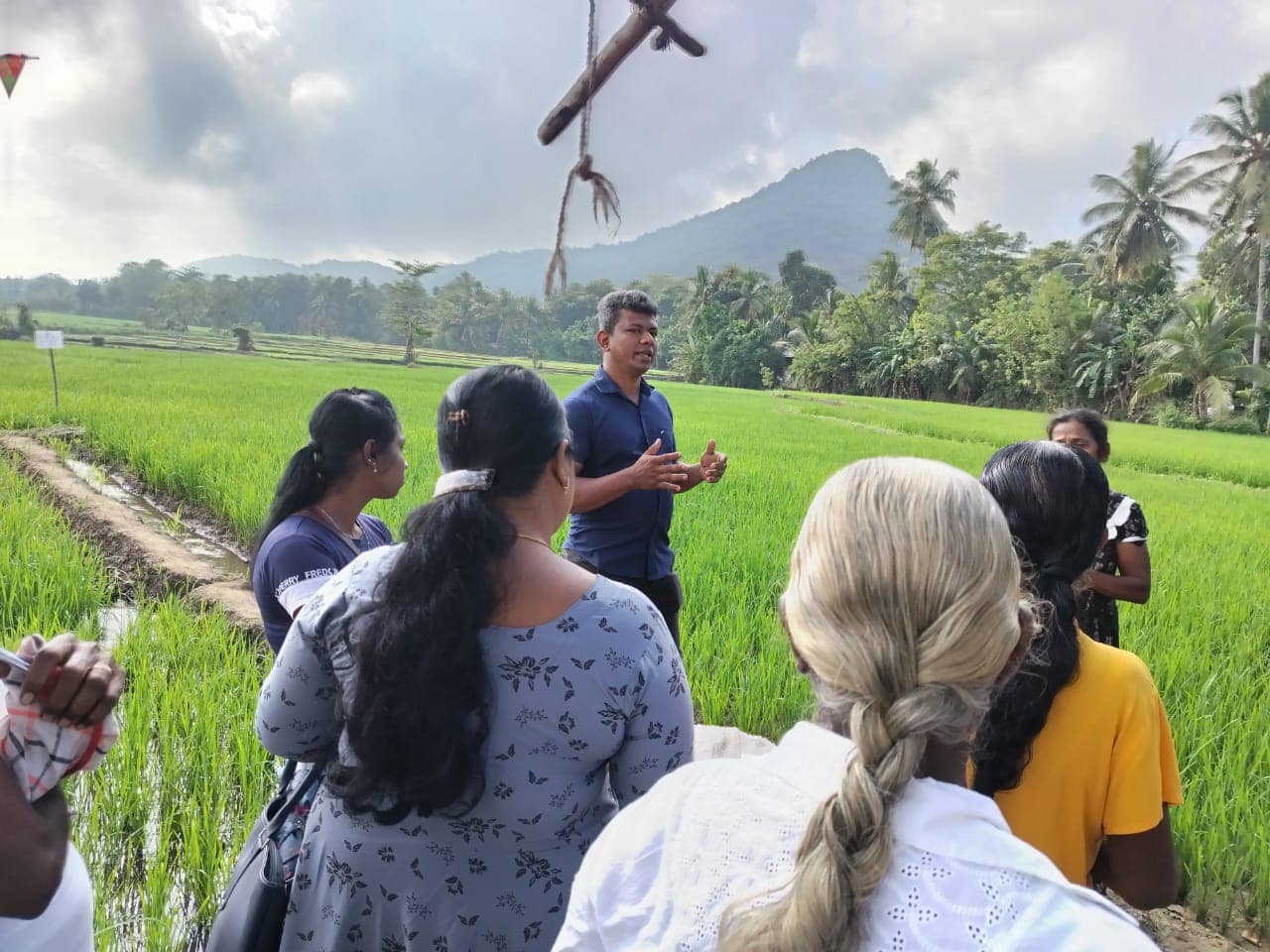
The Field Learning Site (FLS) is a key location for Vikalpani to conduct training on the Parachute cultivation method. The FLS accommodates both women and men farmers, students, participants from exchange programs, and visitors from other countries.
Training with Women’s group: https://www.facebook.com/share/p/1CobX9pHiD/
Opening of the Fls : https://www.facebook.com/share/p/1a2VYVWrYN/
Advocacy campaign/s and description/s, including online links (URL) and resource materials
A specific material has not been developed.
More information can find : https://vikalpani.org/our-services/
Brief description of the impacts of agroecology praxis on the household, farm, and community
The Vikalpani Parachute Paddy Cultivation Field Learning Site (FLS) actively serves the Samanala women’s group, local communities in the village, and all participants who visit the site to learn about the parachute paddy cultivation method.
The Samanala group, which manages the FLS, is continuously engaged in the learning process and also facilitates training programs, providing food and accommodation for those who come to learn from Samantha. Moreover, Samantha supplies seed paddy to the Vikalpani Seed Production and Distribution Society, and seeds are also sold among farmers in the village.
She cultivates indigenous seed varieties using agroecological practices, and her fields and crops show strong resilience to the impacts of climate change.